
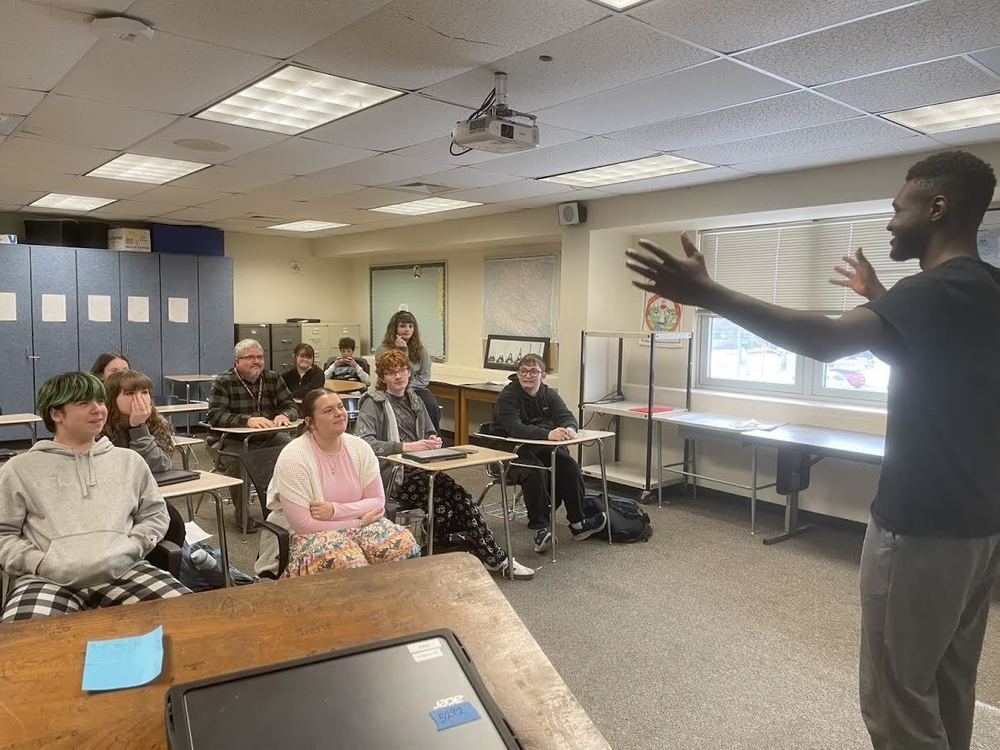
Ed Workman didn’t set out to be a teacher.
In fact, it was the last thing he wanted to do for a career — until he realized teaching isn’t really about content. It’s about shaping people.
That realization came not in a classroom, but at home, after the birth of his first child. As a new parent, Workman found himself patiently teaching a toddler the smallest, most basic skills - like how to eat cereal from a bowl - and he saw how repetition and encouragement slowly led to progress and accomplishment.
“It worked,” he said. “I could shape this little human. I was like, wait a minute, that’s actually kind of magical. Maybe I’m missing out. Maybe I should look into this.”
At the time, Workman was doing exactly what he had planned. After earning a college degree in French, he was working as a translator and interpreter, primarily for Canadian companies required by law to maintain records in both French and English. Everything from employee manuals to invoices and receipts had to exist in both languages.
“They’d gather it all up, kind of like tax season, and send me this giant care package and say, ‘We need all of this back in the other language by this point,’” he said. It was a little feast or famine, but it was a viable career.
Still, the experience of teaching his child stayed with him, so while continuing translation work and juggling a couple other jobs, Workman returned to school in 1999–2000 to earn his teaching degree.
He completed his student teaching in Carthage, Mo., in 2000 and was hired the following year as the district’s French teacher. He later took over the forensics and debate program, building it into a successful and competitive team.
But after five years, things had shifted.
“After a while, it just wasn’t quite as magical,” he said. “A big part of what I realized once Parsons came into my life is that the (Carthage) kids didn’t really need me. A lot of them came from very wealthy families. Of course they were taking debate, but they didn’t really need me.”
As the program grew — in a high school of about 1,400 students — Workman found himself moving further from the individual teaching moments that had drawn him to the profession. With assistants handling much of the direct coaching, his role became increasingly managerial.
“Teaching is what I was pulled to because of the magic of teaching humans,” he said. “But when you reach that head coach position for a large team, there’s not a lot of teaching humans anymore. You’re managing. And that wasn’t particularly satisfying.”
Disaffected, he began to consider leaving the classroom altogether. As he had been building the Carthage program, he had also started adjunct teaching history and French at Labette Community College.
He was pondering the direction for his future when out of the blue, he received a call from Linda Proehl with Parsons USD 503. The district’s French teacher, John Watson, had been killed in a car accident over Christmas break. Proehl asked if Workman would be willing to step in and take over the position.
“That was in 2007,” Workman said. “I’ve been here ever since.”
Every school day since, Workman has driven 82 miles each way to Parsons High School — a commute that adds up quickly, especially during tournament season. But for him, the reason he has continued to drive here for nearly 20 years is simple.
“The kids here need me,” he said. “It feels kind of weird to say that out loud, but it’s true. I come here and there is someone who genuinely wants to learn French who wouldn’t otherwise have the opportunity. French just isn’t very common in Southeast Kansas.”
The same is true for debate.
“I can safely say they’re great kids, and many of them are genius-level kids,” he said. “But I proudly help make them into debaters, because that doesn’t just happen on its own. There are lots of naturally great arguers, but not a lot of great debaters. That’s a skill set.”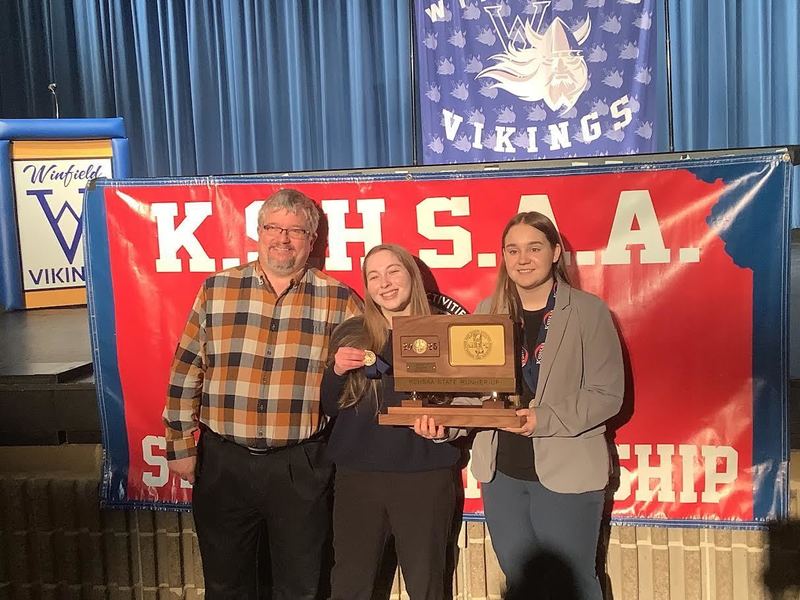
At the core of Workman’s teaching philosophy is a belief that learning shouldn’t be harder than it needs to be. Rather than emphasizing rote memorization, he focuses on teaching students how to learn.
“A lot of what we teach, frankly, the kids will forget,” he said. “What remains is what we taught them about learning — how they studied, what worked for them, the process more than the information.”
That approach has become even more important as student lives have changed. Workman said many students today are working not for extra spending money, but to help support their families.
“There are kids whose jobs are what keep the electricity on,” he said. “It’s all hands on deck now. That wasn’t always the case, but it’s a very real competing force today, especially given the economics of this area.”
Skilled labor jobs rather than college is also a greater consideration for students planning their futures, given the large number of unemployed college graduates, and the vast need for skilled labor.
Because of that, Workman believes school has to work with students’ lives — not pretend those lives outside the school walls don’t exist.
In his classroom, that philosophy translates into creating a space where students feel safe — physically, mentally, and emotionally. He works to challenge students without shaming them, encouraging discussion without fear of embarrassment.
He also places a strong emphasis on critical thinking.
“One of the biggest issues I’ve had is addressed by Aristotle,” Workman said. “‘The sign of a trained mind is the ability to fairly entertain ideas without accepting them.’ That’s what we’re trying to do — teach students how to think, not what to think.”
For Workman, teaching is also about modeling what it looks like to be a reasonably well-adjusted adult — how to communicate, how to listen, how to engage with others respectfully. Sage on the stage, they used to call it- a role that must be taken seriously.
“I recently had a student take my advice and tattoo it on her arm,” he said. “So it’s right there as a reminder. That’s when you realize the impact you can have.”
Over the years, his students have taught him just as much as he has taught them. One of his biggest lessons came from realizing how deeply discipline and correction can affect children, even when they don’t show it.
“They’re never going to show how much it hurts,” he said. “You think you’re just pressing a point, but you’ve already struck the blow with your first words.”
He said he used to be one of those teachers who would press, looking for a desired response
That changed after a student once asked him simply, “Why did you keep going?”
“She taught me something,” he said.
When it comes to showing students they matter, Workman keeps it simple.
“Literally, I tell them,” he said. “They don’t always pick up on it unless you say it.”
Professionally, one of Workman’s proudest accomplishments is earning his third diamond from the National Speech & Debate Association — a distinction requiring decades of coaching excellence and tens of thousands of competition points. He doesn’t know that he will make it to a fourth diamond, given it requires another five years and 15,000 points, but anything is possible.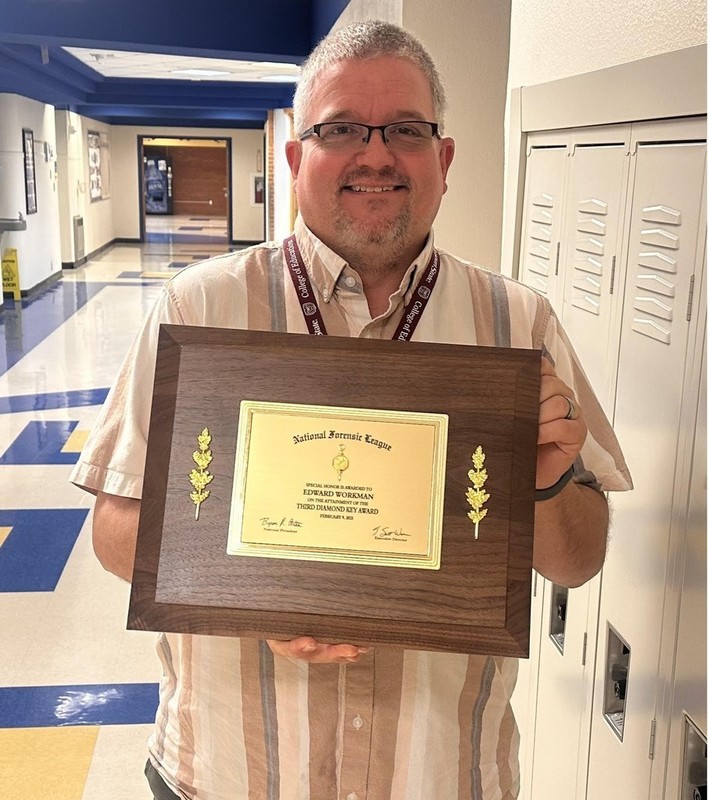
Beyond the classroom, Workman’s life is shaped strongly by his family. He and his wife have ten children — two biological and eight adopted — including seven from Haiti and one from Ecuador, all with special needs.
The decision to adopt internationally came after learning they were unlikely to be approved as foster parents because of his wife’s disability. As they began researching possibilities, they learned it was disabled children who were also least likely to be adopted. They decided to do their part to change that. The couple’s first adoption was Hannah, a child born without eyes and with hearing loss, leaving it unlikely she would be adopted otherwise. Later came David, born HIV positive but healthy after treatment. Still fears kept adopters away, until the Workman’s came along. David was five when he came to live with them. He is now in his third year as a U.S. Marine preparing to head back to Okinawa.
“Quite a crew,” Workman said with a laugh.
They have three 17-year-old boys, with never ending appetites, who remain at home.
“I used to joke that I should’ve bought stock in a ramen factory,” he said. “I’m kind of kicking myself that I didn’t.”
For Workman, whether at home or in the classroom, the work has always been about the same thing — patience, presence, and the belief in people and their ability to learn and grow when someone takes the time to teach them.
It’s the same quiet magic he discovered years ago teaching his toddler to eat a bowl of cereal — and the reason, nearly two decades later, he’s still making the drive to Parsons.