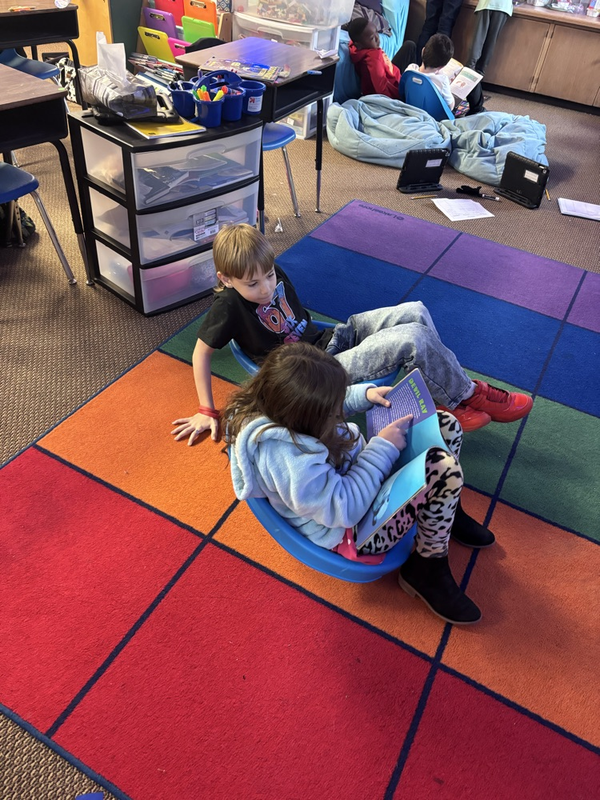

In one chapter of her life, Katrina Strode was helping patients navigate the realities of end of life in an Alzheimer’s unit, but the weight of the work mentally eventually shifted her into a new career, one still focused on helping people, but at a different point in their life story - their beginnings.
That shift first led her to becoming a paraprofessional in public schools. She spent one year at the high school in Chanute, then made a move to Pittsburg—Meadowlark for a year, and then Westside in Pittsburg for eight more. She spent those years watching classrooms from just off-center, learning the rhythm. Somewhere in there the idea settled in and stayed, that this is where she belonged, only leading the classroom.
She earned her teaching degree in 2019. Since then, she’s been at Garfield School in Parsons.
If you ask her to define her teaching style, she doesn’t overcomplicate it: “Flexible, creative, engaging.” Three words, but they stretch, because in practice, her classroom starts somewhere more basic than curriculum, before reading levels and before test scores. Before any of it.
“They’ve got to feel safe. They’ve got to feel loved, wanted, and like they belong. And they’ve got to be full,” she said, adding that only then does learning really begin.
And when it does, she comes back to something she sees as non-negotiable: reading. Not as a subject, but as a foundation. “For you to accomplish anything in life, you need to know how to read,” she said.
It’s not framed as pressure—it’s framed as access to understanding and possibility.
From there, she doesn’t pull students forward so much as she lets them lean into it themselves.
“If you make it fun and show them why they need this, they want to learn it. From there you just keep letting them set the bar, because they are going to keep reaching higher and higher,” she said.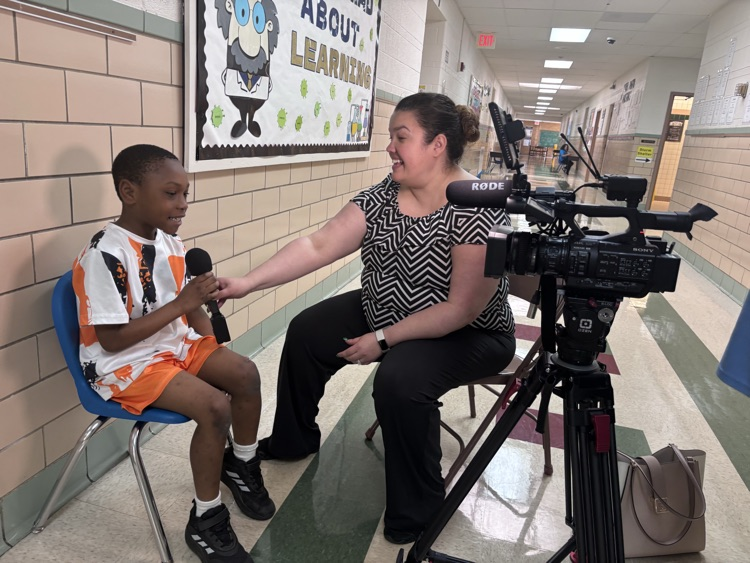
You see that most clearly in how she approaches student goals.
Each week, her students track their own progress. Reading goals. Words per minute. Small, specific targets. They chart them in color—green if they meet the goal, red if they don’t. It’s simple, visual and honest. But more importantly, it’s theirs.
She meets with them regularly, not just to measure progress, but to talk about why it matters. Not long-term, not abstract. Just the next step. Then, the next. It’s structured—but not rigid.
That balance shows up again in the grades she’s gravitated toward. She thought third grade would be her place. It made sense. She had experience there, and she liked the age—old enough to ask real questions, young enough not quite caught up in social distractions.
But second grade surprised her.
“I actually like second grade better than third, which I really didn’t think I would,” she said.
There’s something about the openness of it. The lack of assumption. Second graders don’t yet carry fixed ideas about how answers are supposed to look. They’re still willing to try something unexpected—and mean it.
“They are really open to ideas that we as adults don’t even think about,” she said.
That openness challenges her, too.
She describes herself as organized, the kind of person who likes a plan that holds. But her students don’t always move that way—and she’s learned not to force them into it, and to let herself learn from them.
If she’s trying something new, she’ll turn it back to them: How should we practice this? What would make this fun? And more often than not, the ideas she gets aren’t just workable—they’re better than what she had in mind.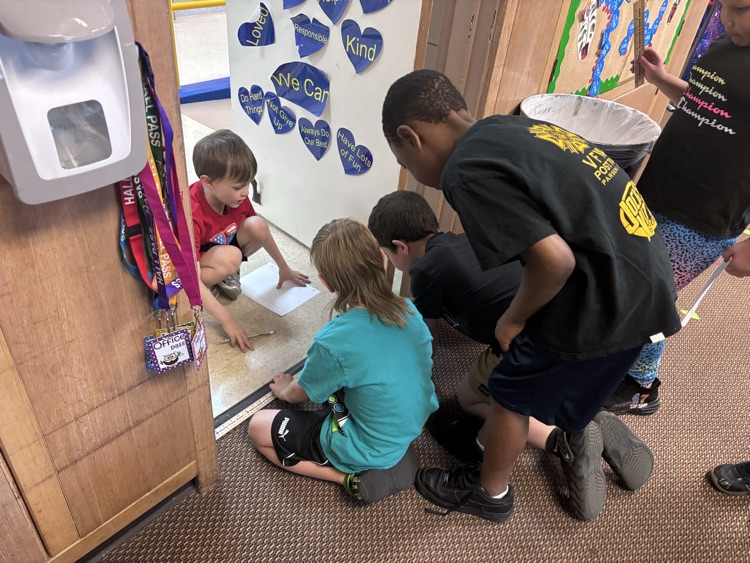
It’s a shift in control, but also in respect.
“That’s part of showing students their value,” she says. “It’s letting them know their opinion matters.”
In her classroom, that belief isn’t abstract. It’s built into the space itself. There’s a mailbox where students can leave her messages—for any reason. Questions, concerns, thoughts they’re not ready to say out loud. The only rule is simple: leave your name.
It’s a small thing. But it signals something bigger—this is a place where your voice goes somewhere.
That matters, especially now.
When she talks about the biggest challenge her students face, she doesn’t hesitate. It isn’t academics.
“It’s all of the trauma.”
Not always direct. Not always visible. But present—in what they hear, what they see, what they carry with them into the room. More than even a decade or two ago.
“It’s just a lot.”
So her classroom adjusts.
Projects come with choice. Students can write, build, present, create. They might research animals, or presidents—but how they show what they’ve learned is up to them. And if two students reach for the same topic, she nudges them apart—not to limit them, but to expand what the class can learn from each other.
They aren’t just completing assignments. They’re teaching one another.
And sometimes, the most important learning moments don’t look like lessons at all.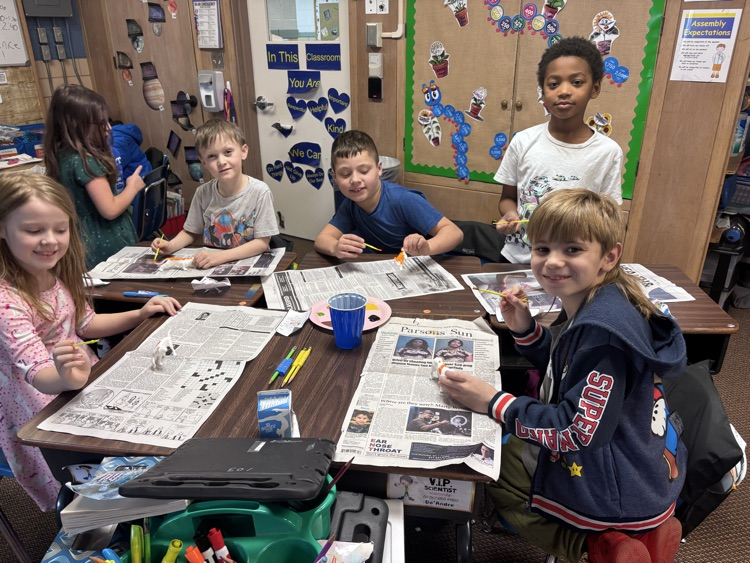
Ask her about her proudest moment, and she won’t give you one.
Instead, she describes a pattern.
A student who struggles—whatever the reason. A skill that doesn’t come easily. The slow work of building toward it. And then, eventually, the shift.
“They get to that moment where they don’t need you to walk them through it anymore—and they realize it,” she said. “They know, ‘I can do this.’”
“They’re little things,” she says. Then, after a pause: “But they’re big.”
There’s a consistency in how she talks about the place she works, too. Working at Garfield School isn’t framed in terms of prestige or performance. It’s simpler than that.
“It feels like a family,” she said, not perfect or polished but centered on the same thing she is—doing what’s best for kids.
And she’s not finished with it yet.
This summer, she’ll start her master’s degree at Newman University, focusing on instructional and curriculum design with an emphasis in ESOL. Another step forward. Another way to widen what she can offer the students who walk into her room.
Outside of school, though, there’s a different side to her life—one that feels almost like an extension of that same creativity she encourages.
She and her husband participate in Renaissance reenactments, with the costumes, and characters - a step into another time.
“We have fun with that,” she says, and you get the sense that the word “fun” matters just as much there as it does in her classroom.